


Best Countries to Visit in 2026: The Official Ranking
- February 23, 2026
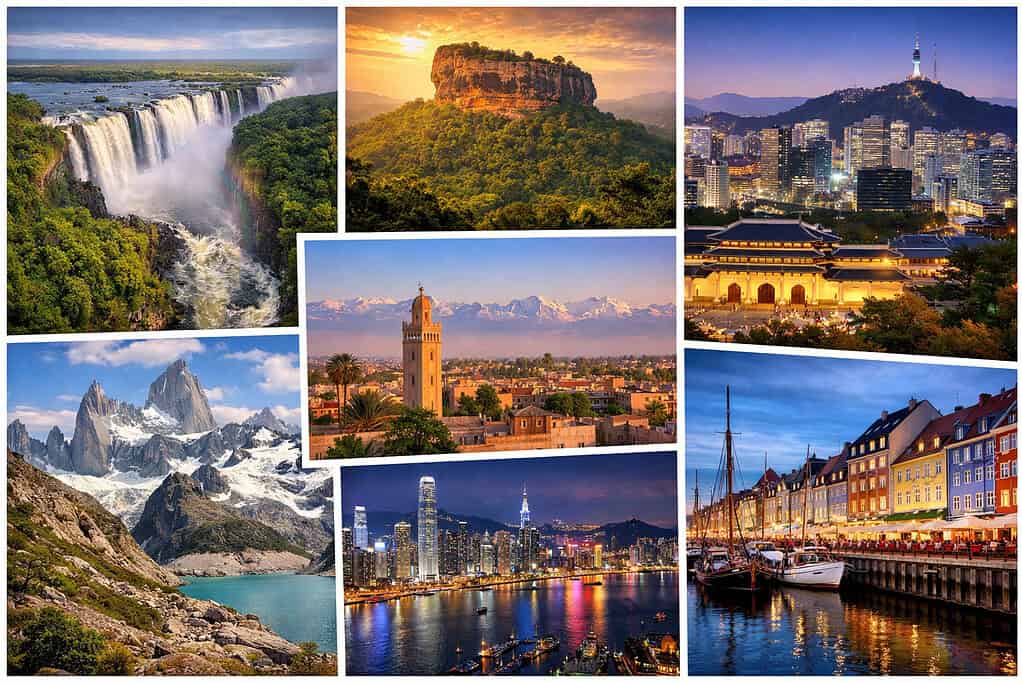
Every year, the major travel platforms release their top destination lists. But most of them mix countries, cities and regions into a single ranking, making meaningful comparisons nearly impossible. Kayak, one of the world’s most widely used flight and travel search engines, took a different approach in its annual Travel Check-in Report: a strict country-by-country ranking. The 2025 edition published in September 2025 and built on real data from tens of millions of flight searches, booking trends and airfare movements is the most factual and reliable country ranking available to guide your travel decisions for 2026.
Here are the ten best countries to visit in 2026, in official ranking order, with the practical information you need to decide and plan your trip.
Zimbabwe : Africa's Most Authentic Safari, Back in the Spotlight
Zimbabwe tops the Kayak 2025 ranking, and it’s a result worth unpacking. Flight searches to Bulawayo surged by more than 80% on the platform, while searches to Harare climbed 56% year-on-year. These are striking numbers for a country that has long struggled with its international image and economic instability and they signal a genuine shift in traveler interest.
What Zimbabwe offers is genuinely rare: an African safari experience in its most elemental form, without the crowds that overwhelm Kenya or Tanzania. Hwange National Park is home to the largest elephant population in Africa — over 40,000 individuals by recent estimates — sharing an ecosystem with lions, wild dogs, hyenas and leopards in a balance that still has the power to stop you in your tracks. Mana Pools, on the banks of the Zambezi River, goes even further: walking and canoeing safaris, at water level, in a park where hippos, crocodiles and swimming elephants share the same river.
And then there are the Victoria Falls Mosi-oa-Tunya, “the smoke that thunders” in Ndebele which can be experienced from the Zimbabwean side with considerably fewer visitors than from Zambia. At 108 metres high and 1,708 metres wide, they are one of the seven natural wonders of the world.
Zimbabwe demands serious preparation: infrastructure is uneven, logistics must be planned well in advance, and working with a reliable local operator is strongly recommended. But it’s precisely that relative inaccessibility that keeps the experience authentic.
Lithuania : The Medieval Europe Nobody Has Discovered Yet
Vilnius, the capital, has one of the best-preserved Baroque old towns in Northern Europe, inscribed on the UNESCO World Heritage List. Its architecture is strikingly layered: Gothic cathedrals, Renaissance palaces, Franciscan convents, restored synagogues and guild houses reflect centuries of coexistence between Polish, Jewish, Russian and Lithuanian cultures. The Užupis neighbourhood self-declared an “Independent Republic” by its artists and intellectuals in 1998, complete with its own constitution displayed on the walls is one of the most genuinely charming and eccentric spots in Europe.
Trakai, 28 kilometres from Vilnius, holds a medieval island castle rising from the emerald waters of Lake Galvė, one of the most photographed images in the Baltic states. The Curonian Spit, a UNESCO-listed sand dune peninsula that Lithuania shares with Russia, delivers a coastal landscape of extraordinary strangeness. And Kaunas, the country’s second city, with its intact Art Deco architecture and its Museum of the Devil (yes, a museum entirely dedicated to artistic representations of the devil across world cultures), has its own quiet surprises.
Lithuania is still affordable, well connected from major European cities, and completely safe for solo travelers and families alike.
Sri Lanka : The Island That Fits an Entire World
Sri Lanka comes in third, confirming a steady tourism recovery following the severe economic and political crisis that shook the country in 2022. The rebound is real, backed by improving economic conditions and a refreshed travel offer.
What makes Sri Lanka truly exceptional is the extraordinary density of entirely different experiences packed into a relatively small island roughly 440 kilometres from north to south. In one to two weeks, a traveler can camp in Yala National Park watching leopards, elephants and wild peacocks; hike through the mist-covered tea plantations around Nuwara Eliya breathing air that feels nothing like the tropics; explore the ancient capital of Polonnaruwa where macaque monkeys wander between Buddhist stupas; and end the journey on the beaches of Mirissa watching blue whales the largest animals that have ever existed on Earth.
Sigiriya, the 5th-century rock fortress rising 200 metres above the surrounding jungle, is one of the most remarkable archaeological sites in Asia. Its ancient frescoes and hydraulic gardens make it one of Sri Lanka’s eight UNESCO World Heritage Sites. The southern city of Galle, with its Portuguese and Dutch colonial fort overlooking the Indian Ocean, occupies a space somewhere between Europe and the tropics that exists nowhere else on Earth.
Sri Lankan cuisine built on coconut milk curries, kottu roti, hoppers and a masterful command of local spices is among the most flavourful in South Asia and remains almost entirely unknown in the West. That is its own kind of discovery.
South Korea : Asian Modernity in All Its Complexity
South Korea shows a 65% surge in flight searches on Kayak, driven in part by the global reach of Korean culture K-pop, K-dramas, the cinema of Bong Joon-ho, and a cuisine that has taken bibimbap and Korean barbecue from Seoul street stalls to restaurant menus worldwide but also by a tourism offer that has genuinely deepened and diversified.
Seoul is a city of jarring, electrifying contrasts. The glass towers of Gangnam rise alongside 15th-century Joseon palaces like Gyeongbokgung, where guards in period costume still stand watch. Gwangjang Market is one of the most authentic street food markets in Asia bindaetteok (mung bean pancakes) fried to order, vendors who have been cooking the same dishes for decades, and an atmosphere completely untouched by tourism. Itaewon, Hongdae and Insadong each present a different face of the city’s cultural life.
Gyeongju, the ancient capital of the Silla Kingdom for nearly a millennium (57 BC to 935 AD), is often described as a museum without walls: royal burial mounds rise out of the middle of the modern city, and the nearby Bulguksa temple complex an 8th-century Buddhist masterpiece in the surrounding hills is among the most harmonious pieces of architecture in Northeast Asia.
Jeju Island, a subtropical volcanic island in the middle of the sea, with its trails around Mount Hallasan, black sand beaches and the haenyeo female free divers who have been harvesting the ocean floor without oxygen tanks for generations has earned its own chapter in the Lonely Planet 2026 guide.
Argentina : South America at Its Most Expansive
Argentina ranks fifth, with a 49% rise in searches to Buenos Aires on Kayak. The country is living through a paradox: a deep economic crisis that has driven the peso down has, for foreign visitors, created extraordinary purchasing power. A quality dinner in Palermo, a winery visit in Mendoza, a night on a traditional estancia in the Pampas — all of these come at a fraction of what they would cost in a comparable destination. For travelers arriving with euros or dollars, Argentina is currently one of the best-value countries in the world.
Buenos Aires is one of the great cultural capitals of the Southern Hemisphere. Its neighbourhoods each have a distinct personality: San Telmo with its Sunday antique market where tango dancers perform in the street; La Boca with its brightly painted houses and the Bombonera stadium; Recoleta with its monumental cemetery where Eva Perón rests among towering family mausoleums; Palermo with its restaurants and parks. The Teatro Colón, consistently ranked among the world’s five finest opera houses, programmes year-round.
Patagonia, in the far south, is one of the wildest and most awe-inspiring regions on Earth. Los Glaciares National Park is home to the Perito Moreno Glacier — one of the rare glaciers in the world that is still advancing — whose constant cracking and calving into Lago Argentino constitutes an unforgettable spectacle of sound and scale. The Torres del Paine (on the Chilean side, reachable from El Calafate) add granite towers and icefield scenery that few places anywhere can match.
The Mendoza wine region, at the foot of the Andes, is South America’s foremost wine-producing area, built around Malbec — a French grape variety that Argentina adopted in the 19th century and has made entirely its own.
Morocco : Africa's Top Tourist Destination, and for Very Good Reasons
Morocco ranks sixth overall in the Kayak 2025 report, confirming its position as Africa’s leading travel destination. In 2024, the country welcomed 17.4 million international tourists a historic record. By 2025, that figure had surpassed 19 million for the first time, with tourism revenues up 21% year-on-year according to the Moroccan Ministry of Tourism. These are the highest figures in the country’s tourism history, and they reflect a destination that is genuinely delivering on its promise.
The appeal is rooted in something simple but rare: an exceptional variety of landscapes and experiences compressed into a relatively compact territory, combined with some of the best air connectivity in Africa from European cities direct flights from London, Paris, Madrid, Amsterdam, Brussels, Rome and dozens more, usually under four hours.
What Morocco Actually Offers
Morocco is one of the few countries in the world where a traveler can, in ten days, cross radically different natural landscapes without boarding a single domestic flight. The medina of Fès el-Bali — the largest inhabited medieval city in the world, with 9,500 lanes and craftsmen working by methods unchanged since the Middle Ages — is the polar opposite of Marrakech’s vibrant, internationally flavoured energy. The Dadès and Todgha gorges in the Anti-Atlas offer vertiginous red rock walls that draw climbers from around the world. The Erg Chebbi desert, with its 150-metre dunes and skies unpolluted by artificial light, is the kind of experience that stays with even the most well-traveled visitor.
On the Atlantic coast, Essaouira combines 16th-century Portuguese ramparts, a working fishing port, and near-constant winds that have made it one of the world’s premier kitesurfing and windsurfing destinations. Further south, Agadir and Taghazout have built an internationally recognised surf scene, with 20°C water in winter and consistent waves year-round.
Chefchaouen, in the Rif Mountains, with its medina painted entirely in shades of blue, has become one of the most photographed towns in the world. Beyond the aesthetics, it is a genuinely pleasant mountain town — cool in summer, with an authentic medina and hiking country in the surrounding hills.
Moroccan Food and Culture
Moroccan cuisine lamb tagine with prunes, bastilla with pigeon, Friday couscous, harira soup, briouates, whole roasted lamb (mechoui) is one of the richest and most nuanced in Africa. It is built on the layering of spices (ras el hanout, cumin, coriander, turmeric, cinnamon), preserved lemon, olives and fresh herbs in proportions that vary by region, by city, by family. Every household has its own version of the tagine. Mint tea, poured from a height in the Moroccan tradition, is a gesture of hospitality found equally in the souks and in the finest restaurants.
What to Know Before You Go
Bargaining in the souks is a social institution. Prices on display are never the final price, and negotiating is expected it is as much a form of conversation as a transaction. Keep your good humour, take your time, and be willing to walk away. Guided tours of the medinas can be useful for first-time visitors but are far from compulsory getting lost in the lanes of Fès or Marrakech is part of the experience. Dress modestly outside the main tourist zones, and apply the same common-sense awareness you would in any busy city.
Morocco is a safe destination for travellers, including solo women, though basic urban vigilance applies in crowded areas.
Norway : Nature at Its Most Uncompromising
Norway ranks seventh, and part of the story here is economic: airfares from the UK dropped by 20% and from the US by 11% compared to the previous year, making a destination long perceived as prohibitively expensive significantly more accessible.
Norway’s fjords are among the most celebrated landscapes on Earth. The Geirangerfjord and Nærøyfjord, both UNESCO World Heritage Sites, can be explored by boat from the villages clinging to the cliff faces above them. The Sognefjord — at 204 kilometres the longest in the country — gives a sense of the geological scale involved. The Trollstigen mountain road, the winter fishing villages of the Lofoten Islands with their drying racks of stockfish, and the high plateau of the Hardangervidda complete a natural panorama unlike anywhere else in Europe.
The Northern Lights, visible between October and March from regions above the 65th parallel — Tromsø, the Lofoten Islands, Norwegian Lapland — remain one of the most sought-after visual experiences in the world. Aurora hunting requires patience: they appear only with clear skies and sufficient solar activity, and neither can be guaranteed. But when they unfold — a silent, undulating curtain of green light above the snow — they justify every cold night of waiting.
In summer, the midnight sun transforms the far north of Norway: the sun does not set for several weeks, bathing the landscape in a perpetual golden light that gives everything an almost unreal quality.
Moldova : The Wine Country Nobody Has Heard Of
Moldova, eighth in the ranking, is one of the most unexpected entries in this list. Wedged between Romania and Ukraine, this small Eastern European country is among the least-visited in the continent — and one of the most genuinely authentic.
Its international reputation rests largely on its wine cellars, some of which are among the largest in the world. Milestii Mici holds more than 1.5 million bottles in its underground galleries, earning a Guinness World Record. Cricova, whose tunnels extend over 120 kilometres, is visited by electric cart at a constant cellar temperature of 12°C. Moldovan wines — primarily local varietals such as Feteasca Neagra, Rara Neagra and Viorica, alongside international grape varieties — are in the middle of a quality renaissance and remain available at very modest prices.
Chisinau, the capital, is a reinvented Soviet city of wide, linden-lined boulevards, animated markets and a nightlife scene surprisingly lively for a city of 700,000 people. The Curchi Monastery in the central hills, and the villages of Gagauzia in the south — where an Orthodox Turkish-speaking minority keeps alive traditions found nowhere else — are worth the detour for travellers who want something genuinely off the beaten path.
Hong Kong : The Asian Metropolis Like No Other
Hong Kong sits ninth in the ranking — technically a Special Administrative Region of China rather than an independent country, but listed separately in travel data for practical reasons. The numbers speak for themselves: this global city continues to draw millions of visitors each year, and the reasons have not changed.
The Hong Kong Island skyline viewed from the Tsim Sha Tsui waterfront in Kowloon is one of the most striking urban panoramas in the world — forty skyscrapers rising at once from the green hills, with Victoria Harbour between the two shores. The Symphony of Lights sound-and-light show, projected nightly across the tower facades, holds a Guinness World Record as one of the largest of its kind on Earth.
But Hong Kong is also a city of markets, trails and food. Temple Street and Ladies Market in Kowloon, dim sum in traditional yum cha restaurants where you tick your choices on a paper notepad, hiking trails that run across the hills thirty minutes from the city centre with plunging views over the harbour and outlying islands — Hong Kong consistently surprises visitors who arrive expecting only glass towers and financial power.
Denmark : The Scandinavian Art of Living Well
Denmark closes the ranking, and deservedly so. Copenhagen has been named one of the world’s most liveable and sustainable cities for several consecutive years. Its urban mobility model where cycling is the primary mode of transport, including in winter is studied and replicated by city planners around the world. Its food scene, since Noma’s opening in 2003 redefined Nordic cuisine globally, is among the most influential on Earth.
But Denmark is not just Copenhagen. The Jutland peninsula holds wild heathland, inland fjords and fishing villages that contrast sharply with the capital’s energy. Bornholm island in the middle of the Baltic is a gem of greenery and traditional smokehouse herring. Frederiksborg Castle and Kronborg Castle (Shakespeare’s Elsinore) on the northern coast of Zealand are among the finest in Northern Europe.
How Do You Choose Between These Ten Countries?
Ten countries, ten radically different propositions. The question is not which one is objectively the best — there is no universal answer — but which one fits what you are looking for this year.
If you want raw wilderness and an authentic safari, Zimbabwe is the answer. If you want affordable medieval Europe still untouched by mass tourism, Lithuania will genuinely surprise you. For an Asian trip that combines Buddhist temples, tropical beaches and spiced cuisine, Sri Lanka is hard to beat. For an immersion in the Asian modernity that global pop culture has made familiar, South Korea is the destination of the moment. For exceptional value on the American continent, Argentina is in a class of its own right now. For a Northern European escape defined by fjords and the Northern Lights, Norway remains unmatched.
And for a complete change of scene — culturally rich, accessible from Europe in under four hours, with a landscape range stretching from the Sahara to the Atlantic through the High Atlas — without ever losing sight of one of the world’s most generous cuisines, Morocco, sixth in this global ranking, stands as one of the strongest travel choices anyone can make in 2026.
If You're Going to Morocco: How to Stay Connected Without the Hassle
One practical question comes up consistently for travelers heading to Morocco from Europe, the US or Canada: internet connectivity. Morocco is not a member of the European Union, which means the EU roaming agreements that eliminate data charges across EU member states simply do not apply. Using a French, British, Belgian or Spanish mobile plan in Morocco can generate significant roaming charges.
The simplest and most cost-effective solution we can recommend is renting a portable WiFi router through Rent A Phone (rentaphone.ma), a Marrakech-based company specialised in this service for international travelers.
The process is straightforward: the router is delivered directly to your hotel, riad, or the airport car park on arrival. Switch it on — no setup, no configuration, no SIM card to activate — and you are online immediately. The connection is unlimited with no data cap, at speeds of up to 300 Mbps on Morocco’s 4G networks. Up to 10 devices can connect simultaneously, making it ideal for families or groups where everyone needs their own connection. The battery holds for 8 hours of continuous use, covering a full day of sightseeing without needing to recharge. At the end of your stay, a courier collects the device from your address — nothing to return to a shop.
The rate is €4.90 per day (2-day minimum). The service currently operates in Marrakech and Fès, and is rated 5/5 on Google by its customers.