


How to Dress in Morocco as a Tourist: Practical Advice
- January 22, 2026
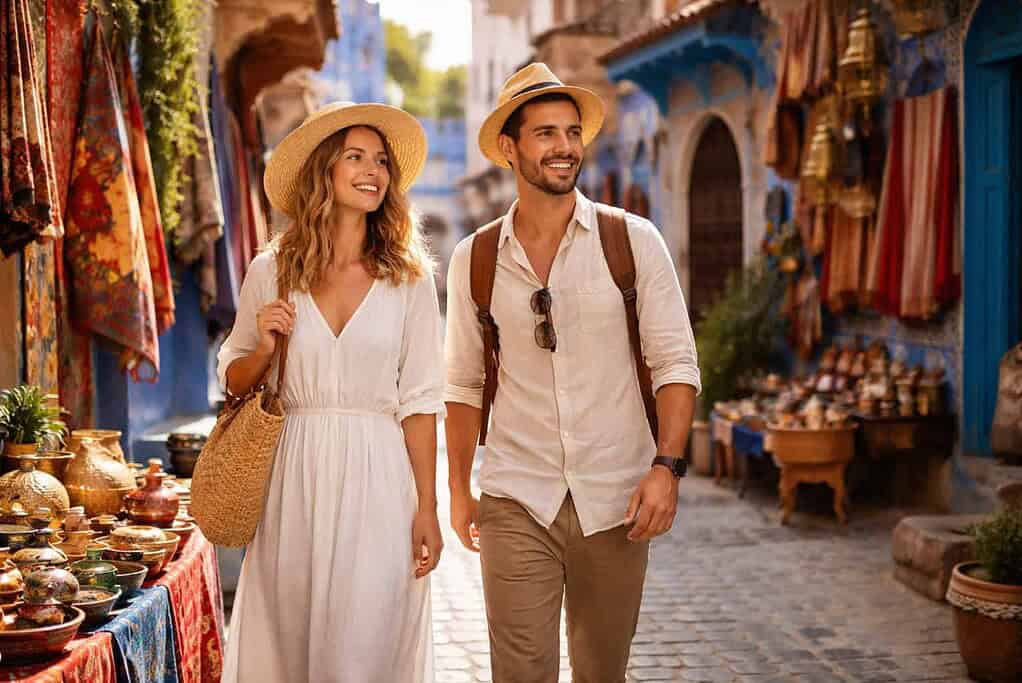
Welcome to Morocco, a land where modernity and tradition meet in beautiful harmony! If you’re wondering How to Dress in Morocco, rest assured: this is a natural question for any visitor mindful of respecting the local culture. This article aims to provide you with practical, neutral, and respectful advice to guide your clothing choices as you travel through the Kingdom.
Moroccans are renowned for their hospitality and tolerance. In cosmopolitan cities like Casablanca, Rabat, or Marrakech, you’ll see a wide variety of dress, and tourists generally enjoy great freedom. However, to have a more authentic and respectful experience, particularly in historic medinas, traditional villages, and rural areas, adapting your outfit is a sign of consideration that is greatly appreciated. It will also help you feel more comfortable and better integrated.
Understanding these nuances is key to a successful trip. Here, we will cover the main principles to know, highlighting the richness and openness of Moroccan culture, a “space of coexistence and interaction with different human civilizations and cultures.”
How to Dress in Morocco ?
Before you start packing, it’s essential to grasp the spirit that guides clothing choices in Morocco. It’s not about a strict list of don’ts, but rather a social code based on modesty, respect, and context.
The Principle of Modest Dress
The concept of modesty, or hachouma, is central in Moroccan public spaces. It generally translates to covering the shoulders, chest, stomach, and knees. For both women and men, choosing loose-fitting clothes over tight ones is both in line with this expectation and more comfortable in the heat. In places of worship, this requirement is more pronounced; women will often need to cover their heads with a scarf, and men should wear trousers and long sleeves.
It is worth noting that this approach aligns with a moderate and tolerant vision of Islam promoted at the national level. Morocco, under the leadership of its King as “Commander of the Faithful,” champions an Islam of the “middle path,” valuing dialogue and rejecting extremism.
Tolerance, Context, and Common Sense
The golden rule is adaptation to context. The perfect outfit for a stroll through the alleyways of an Atlas Mountain village won’t be the same as what you’d wear in a modern Tangier restaurant. Moroccans show great understanding towards visitors, but they place high value on mutual respect. Dressing appropriately is a mark of that respect.
It’s also important to remember that your attire influences your experience. Discreet, situation-appropriate clothing often helps avoid unwanted stares or comments, especially for women traveling alone, and facilitates interactions with locals. In short, it’s more about reading the environment than following rigid rules.
Adapting Your Wardrobe to the Moroccan Climate
Morocco features a great climatic diversity that must absolutely guide your clothing choices. From the cool Atlantic coast to the desert heat, and the cold of the Atlas Mountains, your suitcase will need to be versatile.
Handling the Heat (Spring, Summer, Early Autumn)
During summer, temperatures can exceed 40°C (104°F) inland, for instance in Marrakech or Ouarzazate. The key is to strike a balance between sun protection and respect for cultural codes.
Fabric Choice: Prioritize light, breathable, natural fabrics like cotton, linen, or silk. They allow air to circulate and absorb sweat, unlike synthetic materials which can be uncomfortable.
Colors: Light colors (white, beige, pastels) reflect light and heat, while dark colors absorb them.
Cut: Loose, long clothing is paradoxically the most suitable. A light, long-sleeved cotton tunic or wide-leg trousers protect your skin from the intense sun while being culturally appropriate.
Preparing for the Cold (Winter and High Altitudes)
Winter can be surprisingly cool, especially at night. In the desert, temperatures can drop to near 0°C (32°F) after sunset. In the mountains, particularly the High and Middle Atlas, it can snow and conditions can be harsh.
-
The Layering Technique: This is the most effective method. Layer several thin items (t-shirt, shirt, light sweater) that you can remove or add based on temperature swings between day and night, or outdoors and indoors.
-
Essential Items: A cardigan or warm jacket is essential for evenings. For a stay in the mountains or the desert in winter, plan for a thicker coat, a hat, and gloves.
Bracing for Inclement Weather
The rainy season generally stretches from autumn to spring, with heavier precipitation in the north and mountainous regions. A waterproof, breathable jacket will be a valuable ally. Also prioritize closed-toe shoes with good grip, especially if you plan to visit medinas with uneven cobblestones or walk in the mountains.
Outfits and Activities: From City to Desert
Your clothing choices should also reflect the types of experiences you’ll be having.
Exploring Cities and Medinas
In urban settings, you can mix practicality and style. For women, long dresses, wide-leg trousers paired with tunics, or kaftan-style sets are safe bets. For men, linen or cotton trousers and short or long-sleeved shirts are perfect. Simply avoid beachwear (swimsuits, very short shorts, tank tops) outside of dedicated areas. A pair of comfortable walking shoes is essential.
Adventure in Rural Areas and Mountains
In villages and the countryside, traditions are often more preserved. It is advisable to adopt more covering and discreet attire. For mountain hikes, focus on functionality: technical clothing, hiking shoes, and layers adaptable to sudden weather changes. A wide-brimmed hat and sunglasses are indispensable.
How to Dress in Morocco : Sahara Desert
The desert demands maximum protection against the sun, wind, and sand.
Daytime: Cover up completely with light, loose clothing. A cheich or large scarf (to cover the head and face) is very useful.
Nighttime: With temperatures dropping radically, plan for warm clothing (fleece, jacket). A sleeping bag rated for low temperatures is necessary for overnight camping.
Visiting Places of Worship
To visit a mosque (like the Hassan II Mosque in Casablanca, one of the few accessible to non-Muslims), sober, covering attire is mandatory. Women will need to cover their hair with a scarf. It is also customary to remove your shoes at the entrance, so easily removable shoes are practical.
General Tips for a Successful Experience
Beyond clothing, a few simple tricks will make your trip more enjoyable.
-
The Scarf, Your Multi-Functional Accessory: Whether in cotton or silk, a large scarf is incredibly useful. It can serve as a headscarf for mosque visits, protection against the desert sun or wind, a shawl for bare shoulders, or even a light blanket.
-
Practical Footwear: You will walk a lot on varied terrain. Prioritize comfort. Closed-toe sandals or sneakers are ideal for the city. For the mountains or desert, hiking boots or closed shoes that protect from sand are necessary.
-
Luggage Management: Prioritize versatility. Choose pieces that easily mix and match and can be layered. Think about neutral colors that coordinate well. Don’t forget a light daypack for your daily excursions.
-
Behavior and Attitude: Respect also comes through attitude. Discreet demeanor and gestures are always appreciated. In interactions, a smile and a greeting in Arabic (“Salam alaykum”) or French open many doors.
Morocco is a fascinating destination where travelers are welcomed with legendary generosity. By paying kind attention to your attire, you do much more than follow a convention: you show your interest in your hosts’ culture and pave the way for richer, more authentic exchanges. This will allow you to fully immerse yourself in the beauty and diversity of this country, where, as His Majesty King Mohammed VI highlights, a “fruitful dialogue between cultures and civilizations” takes place.
Enjoy every moment, from breathtaking landscapes to warm encounters, in complete serenity.

To explore Morocco in complete freedom, stay connected without any limits!
Your Moroccan adventure deserves to be lived and shared in real time, without the slightest technical hassle. At Rent a Phone, we have designed a connectivity solution specifically tailored to the needs of travelers so you can focus entirely on your discoveries.
Enjoy our exclusive advantages :
Long Battery Life: Our portable router offers up to 8 hours of battery life, enough to cover your sightseeing days without searching for an outlet.
Truly Unlimited Connection: Browsing, photo sharing, video calls, navigation… No data limits, no surprises on your bill.
Multi-Device Support: Connect up to 10 devices simultaneously (smartphones, tablets, computers) with a single device. Ideal for family or group trips.
Guaranteed High Speed: Benefit from a 4G/5G connection at 300 Mbps throughout Morocco, including remote areas like the desert or mountains.
Absolute Simplicity: No technical setup, no complicated contract. Turn on the router, and it’s ready to use.
Optimal Time Saving: Avoid lines for local SIM cards, network dropouts, or searching for random Wi-Fi. Easy delivery and return (airport, hotel, or pickup point).
Why Choose Us?
We are the Moroccan reference for tourist connectivity rentals. Our service is reliable, secure, and designed to simplify your trip. With Rent A Phone , you stay in control: fast online booking, transparent pricing, and customer support available 7 days a week in French.
Don’t let connectivity hinder your exploration.
Order now on Rent A Phone and travel with peace of mind, all while staying seamlessly connected!
Rent our Pocket Wi-fi for your holidays in Marrakech:
Pocket Wi-Fi in Morocco