- Blog
- Money in Morocco
Money in Morocco: the dirham, cards, ATMs and currency exchange
Morocco uses the Moroccan dirham, a closed currency you cannot easily buy outside the country: you get it on arrival, from an ATM with your bank card or at an authorised bank or exchange office. Foreign currency comes in freely with no upper limit, but anything worth about €9,200 or more must be declared to customs (the threshold is set in Moroccan currency). Keep every exchange receipt: without it, changing leftover dirhams back when you leave is hard.
The essentials
- The dirham is non-convertible: travel with your own currency and a bank card, not with dirhams.
- Foreign currency: no cap on entry, but a written customs declaration from about €9,200 (Office des Changes, GOV.UK).
- Use ATMs, banks and authorised exchange offices; never change money in the street, and keep your receipts.
- Leaving without an entry declaration, you can buy back currency for at most about €1,840 of dirhams, and about €185 at port or airport desks.
- Cash for souks, petit taxis and tips; cards in hotels and restaurants in the big cities.
Pocket WiFi in Marrakech
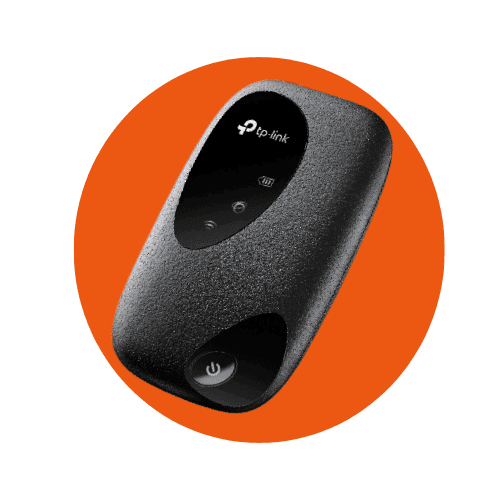
Maroc Telecom 4G router: €4.90 a day (2-day minimum), up to 10 devices, delivered and collected free of charge at your accommodation in Marrakech, 9 am to 6 pm.
Book onlineCard payment in euros.
In this article
- What is the currency of Morocco? The dirham, a closed currency
- How much money can you take into Morocco? Entry and exit rules
- Morocco airport money exchange, banks and exchange offices
- ATMs and bank cards in Morocco
- Is foreign currency accepted in Morocco?
- Euros, pounds or dollars: what should you bring?
- How to tip in Morocco
- How much money do you need in Morocco? Benchmarks in euros
- Money scams in Morocco: what to avoid
- Before you leave: changing dirhams back
- Internet without cash: the Rent A Phone router is paid in euros
- Money in Morocco: frequently asked questions
What is the currency of Morocco? The dirham, a closed currency
Morocco’s currency is the Moroccan dirham, divided into 100 centimes. Its rate against the main foreign currencies is set daily by the central bank, Bank Al-Maghrib, as the Spanish Ministry of Foreign Affairs notes in its travel advice (valid on 23 October 2026).
The key point for travellers: GOV.UK (updated 19 August 2026) describes the dirham as a closed, “non-convertible” currency that cannot easily be exchanged outside Morocco. In practice, there is no point ordering dirhams from your bank or a currency shop at home, and no point taking many home with you either.
Official thresholds are set in Moroccan currency. We give them in euros at the 13 October 2026 rate, rounded; the exact value moves slightly with the exchange rate.
How much money can you take into Morocco? Entry and exit rules
GOV.UK states that you must declare foreign currency worth about €9,200 or more when you enter or leave Morocco. The Office des Changes FAQ (capture of 15 May 2026, after the 2026 foreign-exchange instruction came into force) adds the detail:
- No upper limit: non-residents may bring in foreign banknotes, traveller’s cheques and other foreign-currency means of payment freely.
- Declaration required at customs on entry from about €9,200; optional below that, but useful, because it proves where your money came from. It is valid for six months for a non-resident.
- On departure, you may take out the foreign currency you brought in, subject to a customs declaration backed by the one you made on arrival.
Can you take Moroccan money into Morocco? Only a little. The Spanish ministry says travellers may carry Moroccan banknotes worth no more than about €185, exporting local currency being prohibited beyond that. The Office des Changes pages we read do not repeat this cap, and GOV.UK does not mention it: if in doubt, ask customs on arrival. Passports, visas and border checks are covered in our Morocco entry requirements guide.
Rules depend on your status (non-resident visitor, Moroccan living abroad, foreign resident). This guide is for non-resident tourists and does not replace the official texts.
Morocco airport money exchange, banks and exchange offices
The Spanish ministry recommends changing money at banks or at exchange offices in tourist areas, and notes that the airport and authorised hotels also exchange currency. At an authorised operator, each transaction comes with an exchange receipt (bordereau de change): keep it until you leave.
| Where | Why use it | Good to know |
|---|---|---|
| Airport exchange desk | Right after landing, for the taxi and first purchases | Change a small amount; do the rest in town or at an ATM |
| Bank | Official counter, receipt every time | Limited opening hours, possible queue |
| Authorised exchange office in town | Found in tourist areas | Compare the posted rate and count the notes at the counter |
| ATM (card withdrawal) | Available across towns, no need to carry cash from home | Your bank’s foreign fees apply; keep the slip |
| Authorised hotel | Convenient if you are staying there | Only if it is authorised and gives you a receipt |
Exchange points listed by the Spanish Ministry of Foreign Affairs; operator obligations from the Office des Changes, checked on 23 October 2026.
Two official changes help visitors. Since circular No. 3/2025 of 5 December 2025, authorised exchange offices may sell you dirhams against payment by international bank card on a card terminal, with a receipt handed to you. And the free OC CONNECT app from the Office des Changes shows authorised exchange points near you.
ATMs and bank cards in Morocco
Do I need cash in Morocco? Yes, but you do not need to bring it. The ATM is the simplest option: you withdraw dirhams with your Visa or Mastercard as you go, without carrying a large sum. Your bank will usually charge its foreign-use fees (a fee per withdrawal and a currency conversion margin): check your tariff before you travel and tell your bank where you are going so the card is not blocked.
Is Morocco safe for ATMs? Mostly a question of habits:
- Always pay in dirhams when the screen offers to convert into your home currency: the terminal’s operator then sets the rate, not your bank.
- Use an ATM attached to a bank branch, in daylight, and cover your PIN: GOV.UK warns that aggressive begging is common near ATMs and that credit card fraud and scams are common.
- Keep withdrawal slips: the Office des Changes lists them among the documents that show where your dirhams came from.
Does Morocco take cards? The Spanish ministry mentions hotels, restaurants and bazaars in the big cities. For souks, petit taxis, small cafés and tips, carry dirhams in cash.
Is foreign currency accepted in Morocco?
Sometimes, but it rarely pays. The Spanish ministry says foreign currency is accepted in hotels, restaurants and bazaars in the big cities, with the risk that the rate applied does not match the official rate of the day. Paying with a foreign card usually avoids that, though your bank may add fees.
Pros
- Helps on the first evening if you have no dirhams yet
- Accepted by some hotels, restaurants and bazaars in the big cities
Cons
- The seller sets the rate, usually rounded in their favour
- Change comes back in dirhams, with no receipt
- Refused by small shops and taxis
The simple rule: price quoted in euros, pay by card; price in dirhams, pay in dirhams.
Euros, pounds or dollars: what should you bring?
Banks and authorised exchange offices change the main foreign currencies. Bring the currency your bank account is in, so you avoid a double conversion, and make sure the notes are clean and undamaged. Coming from the UK, Ireland, the US, Canada or Australia, a debit card with low foreign fees plus a backup card kept separately will do more for you than a wallet full of banknotes.
How to tip in Morocco
There is no official scale. Common practice is to leave a tip in restaurants when service is not included, round up a taxi fare, and give a small coin to porters, car-park attendants and guides who have accompanied you. Keep small notes and coins in dirhams: large notes are hard to break in small shops.
How much money do you need in Morocco? Benchmarks in euros
Our guide what budget for 7 days in Marrakech breaks down every item: about €220 per person on a tight budget and about €540 per person for a comfortable riad stay as a couple, excluding flights and excursions. A meal in a simple restaurant costs about €3.20 and a cappuccino about €2 (Numbeo averages of 2 August 2026).
How much cash should you carry? There is no single right amount. The safest approach is to land with enough for a taxi and a meal, then withdraw as you need it, rather than carrying your whole budget in notes.
Money scams in Morocco: what to avoid
Watch out
Never change money in the street: only authorised operators issue an exchange receipt, and without one you cannot change your dirhams back. GOV.UK also warns that passing fraudulent banknotes carries significant prison sentences and that defacing Moroccan banknotes is illegal: refuse a doubtful note and never write on one.
- Count the notes at the counter before you walk away.
- Keep your card in sight when you pay.
- Be wary of a “special rate” offered by a stranger or an unofficial guide.
Other travel risks are covered in our guide is Morocco safe for tourists.
Before you leave: changing dirhams back
- Spend first your last dirhams: it is simpler than changing them back.
- With your entry declaration, a bank or exchange office buys back the remainder on presentation of the original and the exchange receipts in your name.
- Without a declaration, the buy-back is capped at about €1,840, against an exchange receipt in your name less than six months old.
- At the port or airport, exchange desks buy back up to about €185 per passport, on presentation of your boarding pass.
These rules come from the Office des Changes FAQ (capture of 15 May 2026). The oc.gov.ma site was under maintenance on 23 October 2026: double-check locally if in doubt.
Internet without cash: the Rent A Phone router is paid in euros
One expense you can settle before you have any dirhams: getting online. A local SIM card is bought in a shop, with your passport, and paid on the spot (see buying a local SIM). The Rent A Phone pocket Wi-Fi router is booked online and paid by card, in euros: €4.90 per day per router, two days minimum, unlimited data on the Maroc Telecom 4G network, up to 10 devices connected.
It is delivered and collected free of charge at your accommodation in Marrakech (hotel, riad, rental), between 9 am and 6 pm. The €50 deposit is a card pre-authorisation, not a charge. Travelling alone with an eSIM-compatible phone? An eSIM such as eSIM Maroc’s (€24 for 7 days, paid in euros) may be enough. Book the router.
Money in Morocco: frequently asked questions
What money do they use in Morocco?
The Moroccan dirham, divided into 100 centimes, with a daily rate set by the central bank, Bank Al-Maghrib. It is a closed, non-convertible currency, so you get it in Morocco, from an ATM or an authorised exchange office, not before you travel.
Do I need cash in Morocco?
Yes, for souks, petit taxis, small cafés and tips. Hotels and restaurants in the big cities usually take cards. You do not need to bring cash from home: withdraw dirhams from ATMs as you go.
Can I change money at the airport in Morocco?
Yes, airports have authorised exchange desks, as do banks, exchange offices in tourist areas and some authorised hotels. Change just enough at the airport for a taxi and a meal, and keep the receipt you are given.
How much cash can I take to Morocco?
There is no cap on foreign currency, but GOV.UK and the Office des Changes require a written customs declaration from about €9,200. Below that it is optional, but it helps if you want to take currency out again or buy back currency when you leave.
Can you take Moroccan money into Morocco?
Only a small amount. The Spanish Ministry of Foreign Affairs says travellers may carry Moroccan banknotes worth no more than about €185; the Office des Changes pages we read do not state this cap. Since dirhams are hard to buy abroad anyway, it rarely matters.
Can I rent the Rent A Phone router without dirhams?
Yes. The router is booked online and paid by card in euros: €4.90 per day, two days minimum, with a €50 deposit taken as a card pre-authorisation. It is delivered free to your accommodation in Marrakech, between 9 am and 6 pm.