- Blog
- Entry requirements
Morocco entry requirements: passport, visa and length of stay, by nationality

British, American, Irish, Canadian and Australian citizens do not need a visa to visit Morocco as tourists for up to 90 days: a valid passport is enough. How much validity that passport needs depends on who you ask: the UK government says at least 3 months after you arrive, while the US, Irish and Canadian governments say 6 months (official pages checked on 23 October 2026). Below are the rules side by side, plus what changes for children, dual nationals and customs.
The essentials
- No visa for tourist stays of up to 90 days on a UK, US, Irish, Canadian or Australian passport.
- Passport validity differs by source: 3 months after arrival (UK), 6 months at entry (US, Ireland), 6 months after departure (Canada). The safe choice is 6 months beyond your return date.
- An Irish passport card is not accepted: you need the passport book.
- Make sure your passport is stamped on arrival; travellers without an entry stamp have had problems leaving.
- Customs: drones are banned without prior authorisation, and foreign cash above a threshold of about €9,200 must be declared.
Pocket WiFi in Marrakech
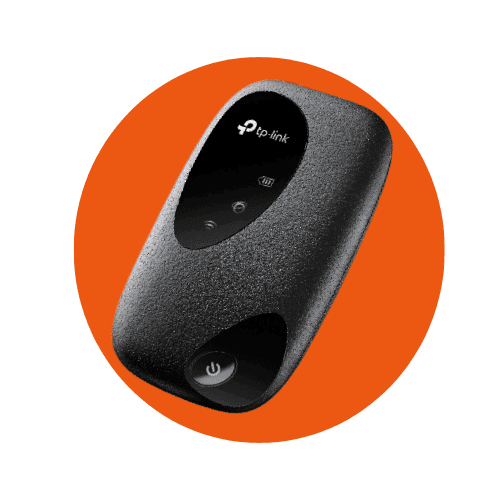
Maroc Telecom 4G router: €4.90 a day (2-day minimum), up to 10 devices, delivered and collected free of charge at your accommodation in Marrakech, 9 am to 6 pm.
Book onlineCard payment in euros.
In this article
- Do I need a visa for Morocco? The short answer
- Passport validity for Morocco: 3 or 6 months?
- Other passports and UK residence documents
- How long can you stay, and what if you need more than 90 days?
- What happens at passport control
- Travelling to Morocco with children
- Dual nationals: which passport to show?
- Morocco customs: what you can bring in
- Once your papers are sorted: your phone
- Morocco entry requirements: frequently asked questions
Do I need a visa for Morocco? The short answer
For the five main English-speaking nationalities, the answer is no: you can visit Morocco as a tourist without a visa for up to 90 days. You only need your passport, and it must be valid and undamaged. The UK government notes that the Moroccan authorities have refused entry to some travellers with damaged passports, and that a passport reported lost or stolen will be refused.
| Passport | Visa for tourism | Passport validity asked | Source, last updated |
|---|---|---|---|
| United Kingdom | no, up to 90 days | expiry at least 3 months after arrival | gov.uk, 19 Aug 2026 |
| United States | no, stays under 90 days | at least 6 months at time of entry, 1 blank page | travel.state.gov, 4 Jun 2025 |
| Ireland | no | at least 6 months from date of entry | ireland.ie, 16 Jul 2025 |
| Canada | no, 90 days or less | at least 6 months beyond planned departure | travel.gc.ca, 26 May 2026 |
| Australia | generally no, under 90 days | not stated for Morocco | smartraveller.gov.au, 29 Jul 2026 |
Pages checked on 23 October 2026. The US page was read on its archived copy of 9 July 2026 and the Australian page on its copy of 15 October 2026, as the live pages blocked automated reading that day.
Passport validity for Morocco: 3 or 6 months?
This is the question people search most (“travel to Morocco passport expiry”), and the official answers really do differ. The UK says your passport must have an expiry date at least 3 months after the day you arrive. The US State Department asks for at least six months of validity at the time of entry. Ireland says 6 months from the date of entry, and Canada 6 months beyond the date you expect to leave Morocco. Spain goes even further for its own citizens (more than 6 months, valid for the whole stay).
Each government writes for its own citizens, and Morocco’s own consular site could not be reached when we checked. Canada also reminds travellers that airlines can apply stricter rules than the country itself. Our practical advice, not a legal rule: if your passport expires less than 6 months after your return flight, renew it before you book. That satisfies every source in the table and avoids an argument at the check-in desk.
Watch out
Irish travellers: a passport card is not accepted for Morocco. Ireland’s foreign ministry warns that if you try to enter on a passport card you may be held airside for several days until the next direct flight back to Ireland.
Other passports and UK residence documents
The UK advice only covers people travelling on a full British citizen passport. If you live in the UK on another nationality’s passport, a travel document or a residence card, the UK government says to check with the Moroccan Consulate General in the UK. The same goes for Indian, Pakistani, Philippine, Egyptian or any other passport: some nationalities are visa-exempt, others need a visa or an electronic authorisation.
The official Moroccan portal acces-maroc.ma, linked to the Moroccan foreign ministry’s consular website, has an eligibility checker: you enter your nationality, country of residence, passport type and reason for travel, and it tells you whether you need a visa. It also asks whether you hold another valid visa. Use it rather than a third-party list, which can be out of date.
Visa exemptions only cover tourism. If you are going to work, study or move to Morocco, both the UK and Canada say to contact the Moroccan consulate before you leave.
How long can you stay, and what if you need more than 90 days?
The limit is 90 days. To stay longer, you must request an extension at a Moroccan police station (UK) or, as Canada puts it, at the foreigners’ service section of the local police station at least 15 days before the 90 days run out. The French foreign ministry adds that the extension cannot exceed three months.
Do not overstay. The US State Department says that if you stay beyond 90 days without having requested an extension, you will have to appear before a judge before leaving Morocco, and clearance may include a fine. Australia adds that you could face a deportation order or a re-entry ban, and that you need a written exit permit from the police once your status is regularised.
What happens at passport control
None of the official pages we checked mention an arrival form to fill in for these nationalities. What matters at the border:
- Get your stamp Border officials should stamp your passport on entry. The UK and Australia both report travellers who had trouble leaving because their passport had no entry stamp, so check it before you leave the desk.
- Have your return ticket The French foreign ministry says that non-residents, with or without a visa, must be able to show a return ticket and proof of sufficient funds for their stay.
- Keep proof of where you stay A hotel or riad booking and a bank card are the simplest way to show you can support yourself during the trip.
- Never post your passport Sending passports by post to or through Morocco is illegal; the UK says British passports sent this way are confiscated. Carrying someone else’s passport may also attract scrutiny from officials.
If your passport is lost or stolen in Morocco, the UK says you will need a police report (a déclaration de perte or déclaration de vol), made in the city where it happened, plus an emergency travel document from your embassy to leave the country.
Travelling to Morocco with children
Every child needs their own passport, whatever their age. The UK page does not cover minors, but the French foreign ministry lists the extra documents it recommends for children travelling to Morocco, and they are a useful checklist for any nationality:
- With both parents: a document proving the parent-child relationship, such as a copy of the birth certificate.
- With the mother only: the same proof plus an authorisation from the father.
- Divorced parents: a copy of the court ruling that grants custody to the travelling parent.
- Travelling alone or with another adult (grandparents, school trip): a letter of authorisation from the parents with a certified (notarised) signature.
If one parent is Moroccan, things change. The US State Department says that children with US passports born to a Moroccan father are considered Moroccan citizens and may have trouble leaving Morocco without the father’s permission, even if the mother has legal custody. Canada adds that under Moroccan law, parents may prevent their children from leaving the country. In any custody situation, ask a lawyer or the consulate before you travel.
Dual nationals: which passport to show?
Morocco recognises dual nationality, but according to Canada and Australia, Moroccan citizenship takes precedence while you are in Morocco. Canada notes that airport authorities regularly ask dual citizens for their Moroccan national identity card; the US says dual US-Moroccan citizens are subject to Moroccan law. Australia advises always travelling on your Australian passport if possible.
For the trip home, the UK reminds British dual nationals that they must carry a valid British passport or certificate of entitlement to return to the UK. Carry both documents, and check your own case with the Moroccan consulate where you live.
Morocco customs: what you can bring in
Watch out
Drones are banned in Morocco without prior authorisation. The French and Spanish foreign ministries both warn that a drone found in your luggage may be confiscated, and the French ministry mentions a fine. Leave it at home.
- Foreign cash: there is no limit on bringing in euros, pounds or dollars, but amounts above a threshold set in Moroccan currency, about €9,200 at October 2026 rates, must be declared on entry and exit (gov.uk, US State Department). The euro equivalent moves with the exchange rate.
- Moroccan currency is closed and non-convertible: you cannot buy it before you leave. Sources disagree on how much you may take out (prohibited according to the US and Canada, a small amount allowed according to Spain), so exchange as you go and keep your receipts: the US says leftover dirhams can be converted back only with proof of your original exchange. More in our guide to money in Morocco.
- Taxable or restricted items: the UK says to declare anything that may be prohibited or subject to duty. The US lists firearms, drones, religious materials, antiquities, business equipment and large amounts of currency among the items customs may regulate strictly.
- Your own car or camper van is registered by customs on entry and must leave with you. See our guide to travelling by camper van in Morocco.
We could not read the detailed duty-free allowances (tobacco, alcohol, perfume) on the Moroccan customs website (douane.gov.ma) on 23 October 2026; check it before travelling if you carry these goods.
Once your papers are sorted: your phone
Your passport is also what you show to buy a local SIM card: the Belgian foreign ministry notes that prepaid SIMs are sold on presentation and registration of your passport. Our guides cover buying a local SIM in Morocco and the eSIM in Morocco, which you install at home before you fly. Before you fly, also read how to avoid high roaming charges.
If your trip goes through Marrakech and you are travelling as a couple, family or group, Rent A Phone rents a 4G pocket Wi-Fi router (Maroc Telecom network, unlimited data, up to 10 devices, battery up to 8 hours) for €4.90 per day, 2 days minimum. It is delivered and collected free of charge at your accommodation in Marrakech (hotel, riad or holiday rental) between 9 am and 6 pm. The €50 deposit is a card hold taken after payment, not charged and released when the router is returned. You can book online on our booking page.
Morocco entry requirements: frequently asked questions
Do UK citizens need a visa for Morocco?
No. On a full British citizen passport you can visit Morocco for tourism without a visa for up to 90 days, according to gov.uk (updated 19 August 2026). Your passport must expire at least 3 months after the date you arrive. To stay longer, request an extension at a Moroccan police station.
Do US citizens need a visa for Morocco?
No, not for stays under 90 days. The US State Department asks for a passport with at least six months of validity at the time of entry and one blank page for the entry stamp. Overstaying without an extension means appearing before a judge before you can leave.
How long must my passport be valid to travel to Morocco?
It depends on the source: 3 months after arrival for the UK, 6 months at entry for the US and Ireland, 6 months after departure for Canada. Airlines can be stricter than the border. To be safe, travel with at least 6 months of validity left after your return date.
Can I enter Morocco with an ID card or Irish passport card?
No. Ireland’s foreign ministry says the Irish passport card is not accepted for Morocco, and France and Spain say their national ID cards are not accepted either. You need a passport book, children included.
What documents does a child need to travel to Morocco?
Their own passport, whatever their age. When a child travels with one parent, alone or with another adult, carry proof of the parent-child relationship and a signed, certified authorisation from the absent parent or parents, as the French foreign ministry recommends.
Do I have to declare cash when entering Morocco?
Only above a threshold set in Moroccan currency, worth about €9,200 in October 2026: foreign currency above it must be declared on entry and exit. Below that, no declaration is needed. You cannot buy Moroccan currency before you travel.
Can Rent A Phone deliver a pocket Wi-Fi to my riad?
Yes, in Marrakech. The 4G router is delivered and collected free of charge at your hotel, riad or rental in Marrakech between 9 am and 6 pm. It costs €4.90 per day with a 2-day minimum, plus a €50 card hold as deposit.