
- Blog
- Is Morocco safe?
Is Morocco Safe for Tourists in 2026? Complete Guide & Practical Tips
Yes, for the vast majority of trips Morocco is a safe country to visit. Millions of travellers go every year without trouble, but the official advisories are clear about a few real risks: bag and phone snatching in the big cities, fake guides, dangerous roads at night and a terrorism threat that no government ignores. Here is what the UK, US and Canadian advice says as of autumn 2026, and what to actually do about it.
The essentials
- UK FCDO (reviewed 19 August 2026): no part of Morocco is on the ‘advise against travel’ list, but terrorists are ‘likely to try to carry out attacks’.
- US State Department: Level 2 of 4, ‘Exercise Increased Caution’, advisory issued 4 September 2026, because of terrorism.
- The most likely problem for a visitor is petty theft: pickpocketing, bag-snatching and motorcycle drive-by theft in medinas and on beaches.
- Emergency numbers (FCDO): police 190, ambulance and fire 150, gendarmerie 177.
- British passports need at least 3 months’ validity on arrival; UK and Canadian citizens can stay up to 90 days visa-free.
Pocket WiFi in Marrakech
Maroc Telecom 4G router: €4.90 a day (2-day minimum), up to 10 devices, delivered and collected free of charge at your accommodation in Marrakech, 9 am to 6 pm.
Book onlineCard payment in euros.
In this article
- What the official travel advice says in 2026
- Areas to avoid, and where to take extra care
- Theft, scams and fake guides: the everyday risks
- Roads, taxis and beaches: the underrated dangers
- Solo women, families and LGBT+ travellers
- Health: vaccines, insurance and pharmacies
- Local laws worth knowing
- Before you fly: a short checklist
- If something goes wrong
- Staying connected is part of staying safe
- Morocco safety: frequently asked questions
What the official travel advice says in 2026
Government advisories are written to be cautious, so it helps to read them side by side.
- United Kingdom (FCDO), page reviewed on 19 August 2026: there are no areas of Morocco where the FCDO advises against travel. It does say terrorists are “likely to try to carry out attacks in Morocco”, possibly in transport hubs, tourist sites and crowded places, and notes that “authorities regularly disrupt terrorist cells”.
- United States: Level 2, “Exercise Increased Caution”, issued 4 September 2026, citing the risk of terrorist violence. Level 2 is the same tier the State Department uses for several of Europe’s most visited countries.
- Canada (updated 26 May 2026): “Exercise a high degree of caution” in Morocco due to terrorism, and avoid all travel within 20 km of the Algerian border and near the militarised berm in Western Sahara.
- France (updated 15 September 2026) calls Morocco “a safe country under the control of the authorities” that remains exposed to the terrorist threat.
For context, France’s foreign ministry notes that the last bombing in Morocco was in April 2011, at Jemaa el-Fna square in Marrakech. Two hikers were murdered in the High Atlas in 2018, and a tourist was killed in an attack in Tiznit in 2022. None of this makes the classic routes (Marrakech, Fes, Essaouira, Agadir, Chefchaouen, Merzouga) off-limits, but it is the reason every advisory asks you to stay aware in crowded places.
Areas to avoid, and where to take extra care
The restricted areas are far from the usual tourist circuits:
- The Algerian border: closed. Canada advises against all travel within 20 km of it, and France asks for extra vigilance in the south of this border.
- Western Sahara: a disputed territory (FCDO). Canada advises against non-essential travel because of terrorism and unexploded landmines; France says any route off the coastal highway needs prior approval from the gendarmerie or armed forces.
- The Mauritanian border: France advises against all travel along it, except the coastal road to Nouadhibou.
Two more targeted warnings. In the Rif mountains, a cannabis-growing area, France advises against secondary roads at night. And Spain’s foreign ministry (advice of 9 July 2026) still tells its citizens not to travel to the Al Haouz and Taroudant provinces, hit by the September 2023 earthquake, because access and services remain difficult. Check before booking a trek south of Marrakech.
Theft, scams and fake guides: the everyday risks
Petty crime is the risk you are most likely to meet. The FCDO lists pickpocketing, bag-snatching and “drive-by motorcycle theft of visible jewellery and handbags” in medinas and on beaches. France names Marrakech and Casablanca, where thieves on scooters ride along pavements to grab phones.
- Phones: keep yours on the wall side, not the street side, and don’t walk through narrow lanes with the screen out.
- Fake guides: an official medina guide carries a badge issued by the local authority (FCDO). An unsolicited “shortcut” usually ends in a shop.
- Card fraud and ATMs: use machines inside banks and cover the keypad. Canada reports frequent card fraud and ATM theft.
- Methanol: the FCDO reports deaths from alcoholic drinks containing methanol. Drink only in licensed bars, restaurants and hotels.
- Holiday rentals: France has seen a rise in thefts from Airbnb-type rentals. Don’t leave your passport out if there is no safe.
- Online relationships: the FCDO warns of marriage fraud and extortion targeting people who travel to meet someone they met online.
Haggling in the souks is not a scam, it is how prices work. Agree on a price before accepting any service, including photos with animals on Jemaa el-Fna.
Roads, taxis and beaches: the underrated dangers
Traffic is statistically more dangerous than crime. The FCDO says road accidents are frequent, night driving is risky because of poor lighting, and mountain roads become hazardous in bad weather. France cites Morocco’s national road safety agency (NARSA): a quarter of road deaths are pedestrians.
- Taxis: use licensed petit taxis, on the meter or with the fare agreed before you get in. The FCDO warns that many cars booked through ride-hailing apps may be unlicensed and not insured to carry passengers.
- Driving: UK drivers need the 1968 International Driving Permit plus their licence and a green card from the insurer. Avoid driving at night outside cities.
- Activities: quad bikes, hot-air balloons and adventure tours may not meet UK safety standards. Book licensed operators and check your insurance covers the activity.
- Beaches: many have little or no lifeguard cover, and Atlantic currents are strong.
Solo women, families and LGBT+ travellers
Women: the FCDO and Canada both say women, especially alone, may receive unwanted attention or verbal harassment. Plenty of women travel solo in Morocco and enjoy it; choosing well-reviewed accommodation, avoiding empty streets after dark and wearing loose clothing that covers shoulders and knees in medinas makes a real difference. A short, firm “no thank you” usually ends it.
Families: the main concerns are traffic, swimming and stray dogs, which can gather in packs and behave aggressively (FCDO). Rabies is present, so any bite or scratch needs medical advice the same day.
LGBT+ travellers and unmarried couples: same-sex relations are illegal and public displays of affection can lead to prosecution. Dating apps carry legal and safety risks. For unmarried foreign couples, the FCDO says the hotel-room rule “does not generally apply to visiting foreign nationals”.
Health: vaccines, insurance and pharmacies
- Vaccines: none are required to enter from the UK (a polio certificate applies only if you arrive from a polio-affected country). Check recommendations on TravelHealthPro at least 8 weeks before you go. France has had a measles alert in place since 13 March 2026, so make sure your MMR is up to date.
- Insurance: essential. The FCDO describes public healthcare as limited and private clinics as better; hospitals may ask for payment before discharge.
- Pharmacies: there is always a pharmacy open around the clock in each city and district (FCDO). Bring enough prescription medication for the whole trip.
- Food and water: bottled water, food cooked in front of you, busy stalls. Allergen information is not consistently provided, so state allergies clearly.
- Henna: henna tattoos can cause a painful allergic reaction in some people (FCDO).
Local laws worth knowing
- Drugs: zero tolerance, cannabis included. Expect a long jail sentence, even in transit.
- Alcohol: available in licensed venues; drinking in the street is illegal.
- Ramadan: avoid eating, drinking or smoking in public during the day. The next Ramadan starts in February 2027 according to the FCDO.
- Photos and drones: ask before photographing people; no photos near military sites. Flying a drone needs permission from Morocco’s civil aviation authority.
- Currency: the dirham is a closed currency and cannot be easily exchanged outside Morocco. Declare foreign currency worth about €9,200 or more.
- Religion: proselytising is illegal; most mosques are closed to non-Muslims, with a few exceptions open to visitors.
For clothing, our guide on how to dress in Morocco as a tourist covers cities, medinas and beaches.
Before you fly: a short checklist
- Passport with at least 3 months’ validity on arrival for British passports (FCDO), undamaged, and stamped on entry. Spain asks its citizens for more than 6 months, so check your own government’s rule.
- Visa-free stay of up to 90 days for UK and Canadian tourists; longer stays need an extension at a police station.
- Travel insurance that covers your activities and medical evacuation.
- Digital copies of passport and insurance, available offline.
- Sign up for your government’s travel alerts (FCDO email updates, STEP for US citizens).
- A way to get online from the moment you land (see below).
If something goes wrong
- Police: 190 (France’s ministry still lists 19 for city police).
- Ambulance and fire: 150.
- Gendarmerie (outside towns): 177.
- Tourist police in Marrakech: 05 24 38 46 01, as listed by France’s foreign ministry.
A lost or stolen passport must be reported to the police in the city where it happened. You need that police report (a “déclaration de perte” or “déclaration de vol”) plus an emergency travel document from your embassy to leave the country. In the UK, the FCDO’s 24-hour line is 020 7008 5000 for families worried about someone abroad.
Staying connected is part of staying safe
A working connection lets you follow a map instead of asking strangers, share your live location, check a taxi fare, translate, or reach your insurer at 11 pm. Riad and café Wi-Fi helps, but it stays behind when you walk into the medina.
- Local SIM card: the cheapest option. A passport is required to activate it.
- eSIM: convenient if you travel alone with a compatible phone.
- Pocket Wi-Fi: one small 4G router for the whole group, handy for couples and families.
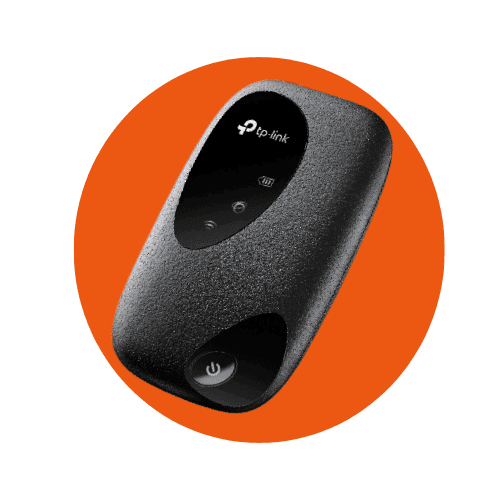
Rent A Phone rents pocket Wi-Fi routers in Marrakech: a TP-Link 4G router on the Maroc Telecom network (the operator reports 4G coverage of 99% of the population), unlimited data, up to 10 devices and up to 8 hours of battery. It is 4G only, not 5G. The price is €4.90 per day per router, two days minimum, paid online by card in euros. Delivery and collection are free at your hotel, riad, Airbnb or wherever you’re staying, and the router then works wherever Maroc Telecom 4G reaches, day trips included. A €50 deposit per router is held on your card, not charged, and released on return. Support answers 7 days a week, 9 am to 6 pm.
If you want to know what works the moment you land, read getting online at Morocco’s airports, and for network quality outside the cities, mobile coverage in Morocco. You can book a router online in three steps.
Morocco safety: frequently asked questions
Is it safe to travel to Morocco right now?
Yes, for normal tourist travel. As of autumn 2026 the UK advises against no part of Morocco, and the US rates it Level 2, ‘Exercise Increased Caution’, because of terrorism. The areas governments restrict are the Algerian and Mauritanian borders and parts of Western Sahara.
Is Marrakech safe for tourists?
Generally yes, with big-city awareness. The main risk is theft, including phone and bag snatching from scooters, which France’s foreign ministry specifically mentions in Marrakech. Keep valuables out of sight, decline unofficial guides and use licensed taxis.
Is Morocco safe for solo female travellers?
Many women travel alone in Morocco without serious problems. Official advice warns of unwanted attention and verbal harassment, especially for women on their own. Well-reviewed accommodation, covering clothing in medinas and avoiding empty streets at night reduce it considerably.
Do I need a visa to visit Morocco?
UK and Canadian citizens can visit for up to 90 days without a visa, according to their governments. British passports must be valid for at least 3 months after arrival. Other nationalities should check their own foreign ministry’s page before booking.
What is the emergency number in Morocco?
The FCDO lists 190 for police, 150 for ambulance and fire, and 177 for the gendarmerie outside towns. France still lists 19 and 15 for police and fire services. In Marrakech the tourist police can be reached on 05 24 38 46 01.
Are credit cards widely accepted in Morocco?
In major hotels and some city shops and restaurants, yes; in souks, small towns and taxis, cash is the norm. Canada reports frequent card fraud and ATM theft, so use ATMs inside banks. The dirham cannot be easily exchanged outside Morocco, so don’t over-withdraw at the end of your stay.